Gdansk's Westerplatte peninsula was the site of the official
start of World War II. A small forested island
separated from Gdansk by the harbour channel, Westerplatte was
established as a Polish military out post during the interwar period.

start of World War II. A small forested island
separated from Gdansk by the harbour channel, Westerplatte was
established as a Polish military out post during the interwar period.

Westerplatte comprised 182 soldiers, who were expencted to withstand any attack. The Versailles treaty made the city state under the protection of the League of Nations, where Poland had a post office, special harbour rights and from 1924 the right to have a 'protected' depot. the site of the railway depot was the small, flat sandy peninsula of Westerplatte, which covered about half a square kilometer of land. when Hitler took power in January 1933 the Poles set out to reinforce their defenses at Westerplatte, they built bunkers, officially designated as Guardhouses, while making concrete reinforced shelters at the bottom of the barracks and the NCOs villa. in addition, the Poles created seven field works. two of which blocked access across the vulnerable land-bridge to the mainland. from March 1939, when hitler made his demands on Poland, the garrison was on full alert and had completed the construction of the fieldworks by late August.


World war II had erupted and Sucharski radioed to Hel Peninsula. Three large holes had been created in the perimeter wall later, henningsen's marines attacked in formation of three platoons while his peoneers managed to blow up the railway gate in the perimeter fence cutting across the land bridge. but then things went wrong for the Germans.
First the Poles counterattacked, knocking out the post, for the loss of three men. then polish commander Lieutenant Leon Pajak opened intense howitzer fire on the advancing Germans, who faltered and stopped their attack.
sucharski ordered his artillery to fire on the German sniper machine-gun nests on top of the warehouses across the canal. it had the desired effect: there was no more shooting from the direction.
then the same battery almost knocked out command post, but finally the ship's guns managed to knock out the battery.
At the other end of the Westerplatte, the Danzig police had tried to seize control of the harbour but armed civilians and the garrison had defeated this surprise attack.
Atotal of 50 Germans lay dead while the Poles had lost only eight men. who had expected to take the depot through a lightning strike, now had a real battle on his hands. Reinforced by 60 troops, the marines attacked again and led by Henningsen. they got through the perimeter wall, which wall in ruins, intense Polish fire. By noon, the fighting was still continuing, but demoralized SS men fled.
Henningsen was mortally wounded, and half an hour later the marines had enough as well.


The Germans had no inkling that the Poles were contemplating capitulation. Every day that Westerplatte held out was superb propaganda for Poland and a humiliation for Hitler who fumed at the setbacks. A Polish agent working for the Germans pointed out that Westerplatte had no deep bunker defenses. Germans sent a fire-train against the land -bridge but if was de-coupled too early by the terrified engine drive and failed to reach the oil cistern inside the Polish perimeter.
If it had succeeded, it would have set the forest alight and destroyed its valuable cover for the defenders. The blazing wagons gave the Poles a perfect field of fire and the Germans suffered heavy casualties as a came in the afternoon but it failed too.

If it had succeeded, it would have set the forest alight and destroyed its valuable cover for the defenders. The blazing wagons gave the Poles a perfect field of fire and the Germans suffered heavy casualties as a came in the afternoon but it failed too.

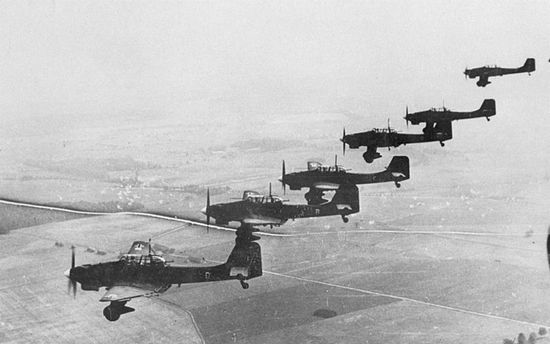
Eberhardt convinced the Germans Commander General Fedor von Bock (1889-1945) that a land attack was not possible. Bock agreed, having witnessed the fiasco. The following day, the attacked the garrison with 60 bombers, dropping more than 100 bombs. No 5 bunker sustained a direct hit, killing all but three of its occupants while the kitchen, food supplies and the radio station were knocked out.
Now the garrison faced hunger, total isolation and the prospect of renewed attacks. Westerplatte hand no anti-aircraft defenses at all and this made the aerial attack destructive to the troops' plummeting morale.
During the night, the Germans attacked the Polish outpost but these were repelled. On a German torpedo boat (T-196) made a surprise attack on the peninsula from the sea side. At the same time, the forward post of 'Wal' had been abandoned and this seemed to invite a German attack along the northern side of Westerplatte only the Fort position prevented this. At the same time , there was no hot food and the number of wounded was piling up.
War council in the food stores where he urged that Westerplatte was to surrender. An angered Dabrowski adamantly opposed such defeatism and stormed out.

No comments:
Post a Comment